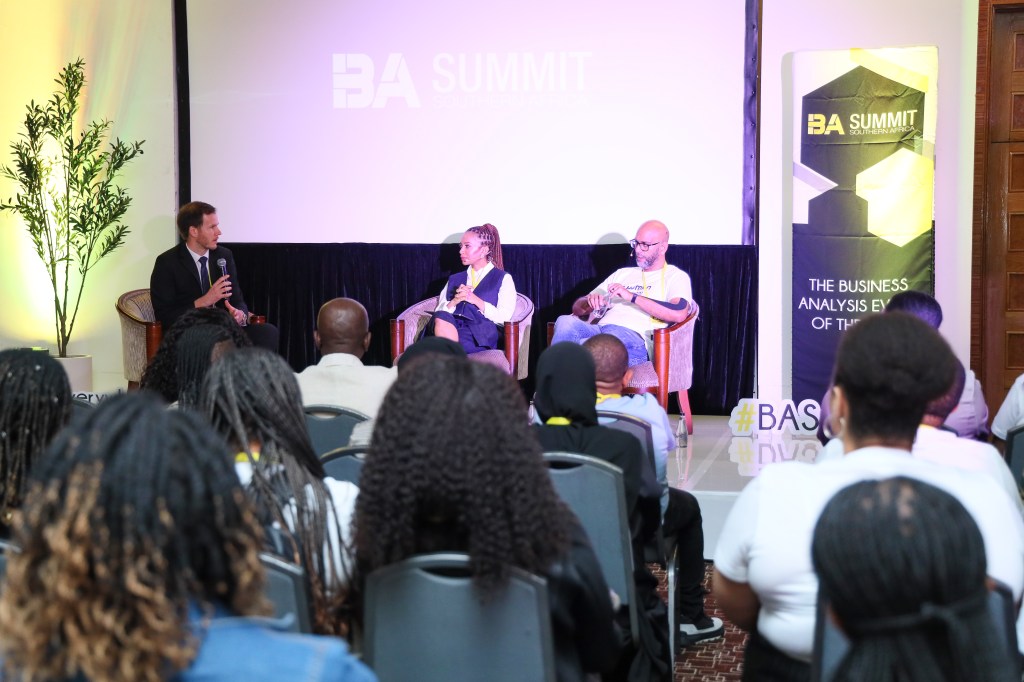
I was given the great honour of being a speaker at this year’s BA summit – an event dubbed the business analysis event of the year, hosted by the South African chapter of the International Institute of Business Analysts. The theme was “resilience and reinvention: business analysis in a fast changing world.” With the widespread adoption of AI, it is natural that there would be concerns about where we as business analysts fit in and how we can use AI to our advantage and solidify our position in the newer paradigm of work. There were many insightful talks which were within the categories of resilience in action, resilience by design and reinventing with tech. Sne Dlamini, the group vice president of technology at AECI limited and Miles Khubeka, founder of Vuyo’s restaurant, delivered inspiring key note speeches on day one of the conference. In their talks, both Sne and Miles highlighted the importance of recognising and respecting the humanity in others and strategic thinking and positioning. On day two, we had an opening key note speech from Filip Hendrickx on the business analyst as a leader – inviting business analysts to be more conscious about showing up as a leader and being situationally aware. To close off the day, an executive panel discussion about what the future business analyst looks like, provoked thought and meaningful discourse, featuring IIBA non executive director, Ryan Folster, Riaz Moonda, the head of analysis at IQ business and Makopi Nkopodi, a group technology executive at Nedbank. It was a jam packed programme with many speakers offering awesome golden nuggets, I wasn’t able to attend all of them but the ones I did were illuminating. It was fantastic to meet other business analysts who are passionate about their craft as well.
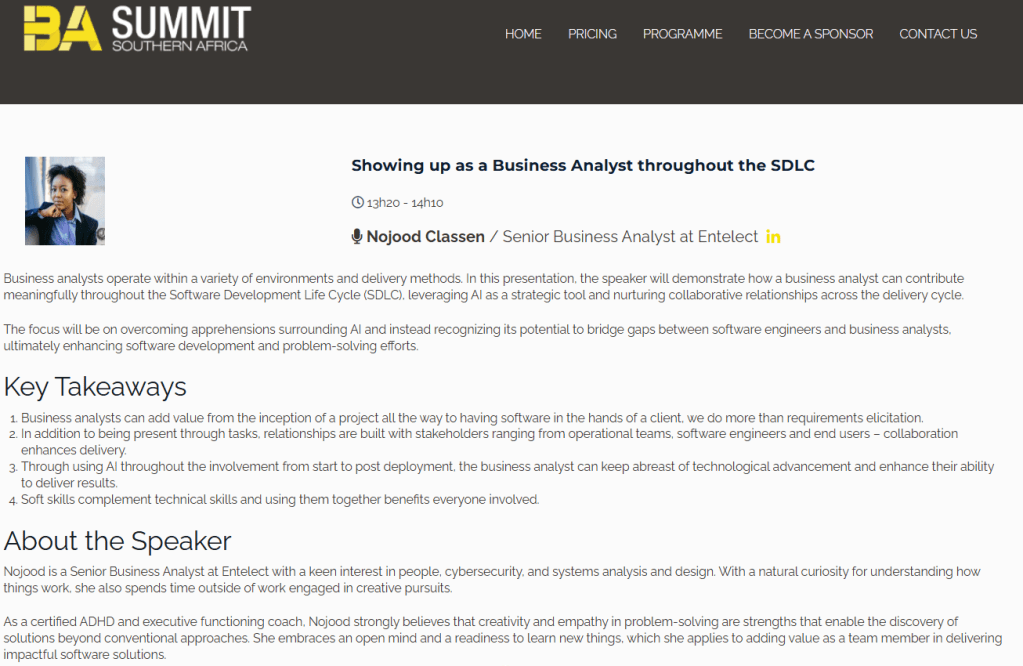
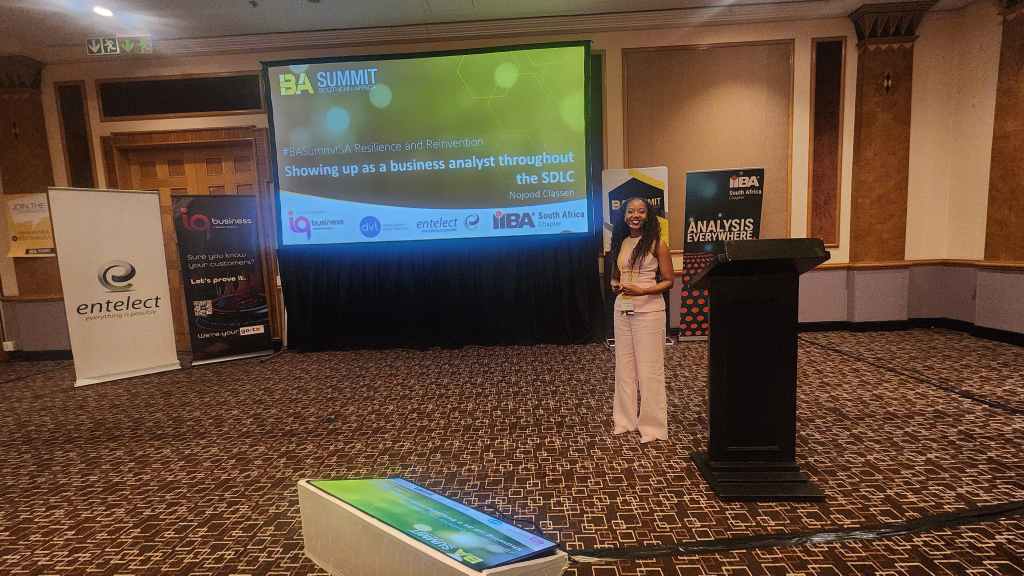
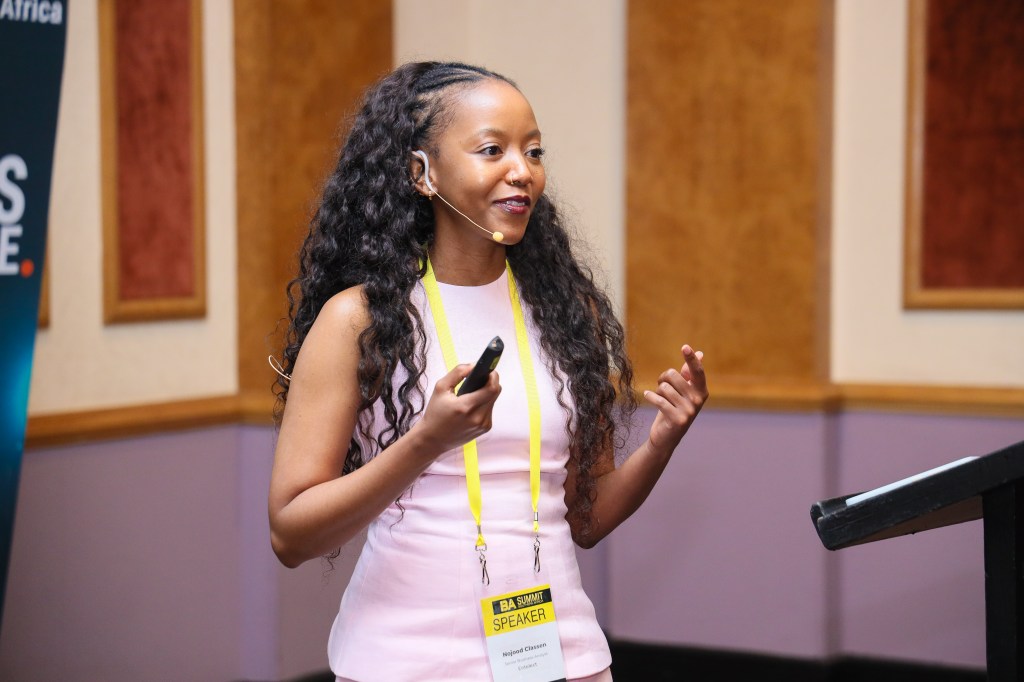
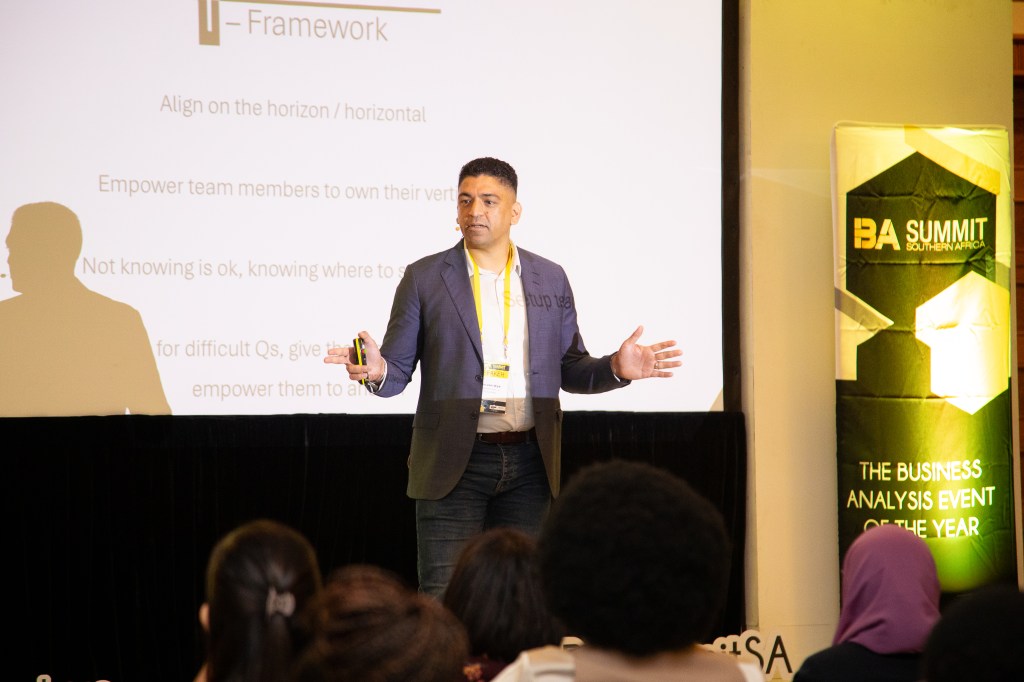
My talk fell under the category: resilience through connection – empowering people and partnerships. I focused on how as business analysts, the way that we can collaborate with stakeholders on a project or in a team, can add strategic value. I also explored some ways that AI can be used as an assistant to guide conversations that may have otherwise been difficult. As business analysts, we find ourselves operating in new domains without too much domain knowledge, using an effective prompt can aid in gathering all the information that would have otherwise have taken cumbersome research to obtain. In addition to this, with the common notion that business analysts are the bridge between business and technology, should a business analyst feel that they are unable to read code, they can use AI tools to aid them in understanding what is in the code and using that to drive communication with software engineers on the team, this is particularly helpful when it comes to determining what is technically feasible when delivering on requirements. I was also able to shed some light on how my certification in ADHD coaching has been advantageous in carrying out my work as a business analyst when it comes to the soft skills that we are required to have. With the advances in technology, it is increasingly important that professionals have a firm grasp on soft skills. I reiterated the importance of empathy in the many ways that it can manifest for us in the professional world. I also noted that what I had observed through ADHD coaching is that, there is a clear overlap between executive functioning skills and the soft skills required in life and work. The infographic below shows the list of executive functioning skills:

I honed in on flexible thinking and self-monitoring. The ability to adapt and be creative is unique to each individual and important to sharpen to arrive at tailored solutions to problems. Self-monitoring has a component in it called metacognition – the ability to be aware of one’s own thoughts. As business analysts, we are required to think on multiple levels, critically and analytically and metacognition underpins the ability to do this effectively. A concept I have learned through Mckinsey & Company in problem solving which employs multilayered thinking is the MECE principle – essentially, that when brainstorming, all possible solutions should be mutually exclusive but collectively exhaustive in addressing the problem. I mentioned that at times, as analysts we may not have the knowledge about everything on a project but we always possess intelligence and showing up is to affirm this and take the first step to apply ourselves however best we can and collaborate with others throughout the way. Tools that we use as business analysts don’t all have to be technological in nature, and to be aware of those that involve the usage of cognitive abilities and combine them with technology is a way to evolve with the times and deliver value.
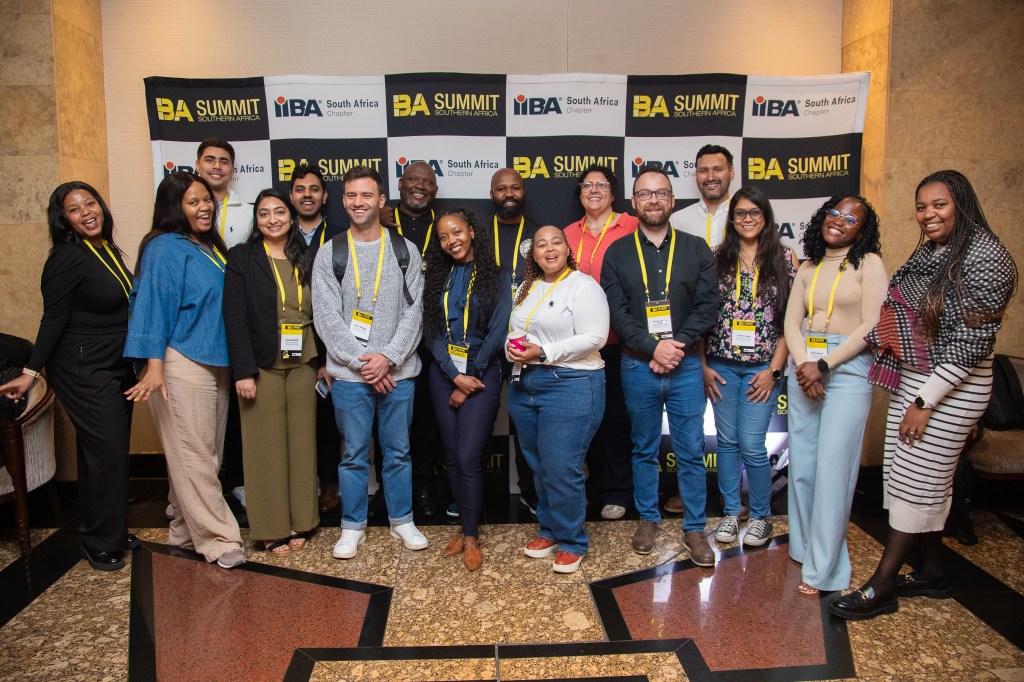
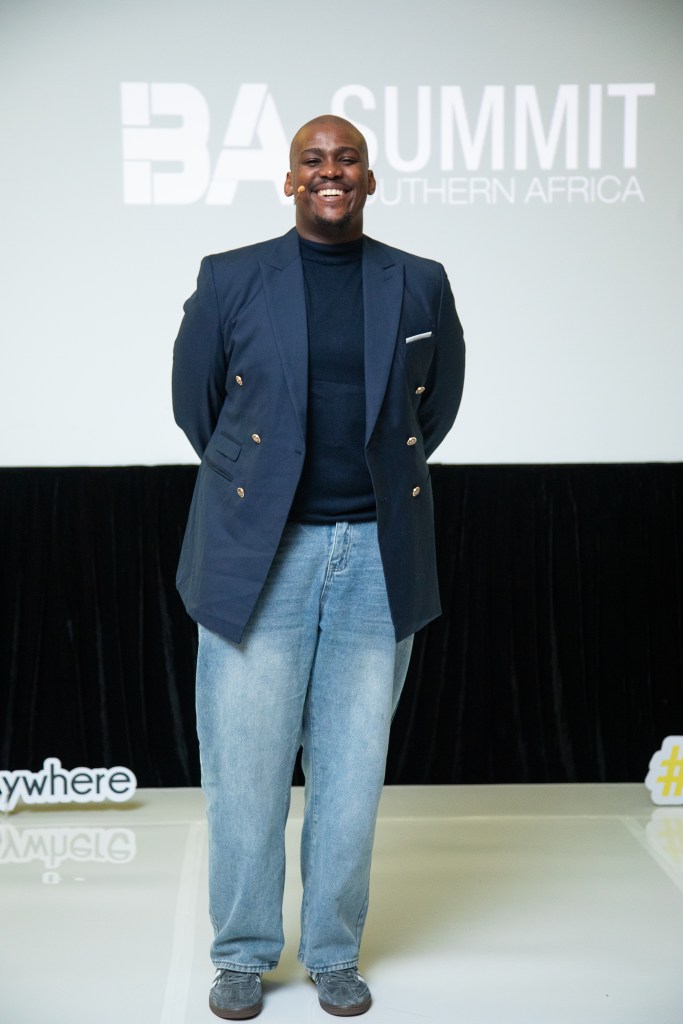
When I wasn’t talking or attending talks, I spent some time at the Entelect table connecting with business analysts at the event who were curious about the company and participating in some of the activities involving other tables where two were hosted by the other two sponsors to the event, IQ business and DVT. It truly was a great time and I would recommend that any business analyst attend an event like this and I am finding myself looking forward to the next BA Summit. Many pictures were taken but these are a few that I grabbed from the event:







View and download my presentation slide deck here:


 Analytically Speaking
Leave a comment